
Dive in the Galapagos Islands now!

Diving Conditions

Diving in the Galapagos is a thrilling and demanding experience that requires solid skills and good physical condition. Conditions vary significantly and often include cold water, strong currents, and reduced visibility. For this reason, Galapagos diving is generally recommended for advanced divers.

That said, the archipelago also offers excellent sites suitable for experienced intermediate divers. We strongly recommend that all divers have a minimum of 50 logged dives, along with prior experience in rough surface conditions, strong currents, and low-visibility environments. Familiarity with cold-water diving — including the use of thicker wetsuits and hoods — is highly advisable to ensure both comfort and safety throughout the expedition.

currents galapagos  | Currents

Currents in the Galapagos can be strong, often reaching 2–4 knots. Divers should expect moderate to strong currents across most sites. Conditions can change quickly during a dive, requiring good buoyancy, awareness, and the ability to adapt.

  | Drift Diving

Most Galapagos dives are drift dives due to strong, steady currents. Divers move with the current, covering more ground with minimal effort. This increases wildlife encounters but requires solid buoyancy, awareness, and close coordination with guides.

surge galapagos  | Surge

Surge is common in shallow areas when currents or swells are present, especially near rocky coastlines. After surfacing, divers should swim away from rocks toward open water so the dinghy can approach safely and efficiently.

visibility  | Visibility

Visibility can reach up to 30 metres (100 ft) in ideal conditions, but is typically 10–21 metres (30–70 ft). Plankton-rich waters may reduce visibility, often signaling increased marine life activity.

depth  | Depth

Most dives range from 6–24 metres (20–80 ft), though some sites exceed 40 metres (130 ft). The richest marine life is usually found above 18 metres (60 ft). During El Niño years, some species may stay deeper.

  | Water Temperature

Surface temperatures range from 18–25°C (64–77°F), but can drop to 13°C (56°F) at depth. Thermoclines are common between 12–18 metres (40–60 ft), with sudden temperature drops caused by cold upwellings.

  | Wetsuits / Drysuits

Layering is recommended. A 7 mm wetsuit with hood, booties, and gloves suits most divers. A drysuit with a 5 mm hood offers excellent warmth and comfort, especially in colder conditions.

Diving Sites

galapagos-aqua-baltra

| Baltra North East

(Checkout dive)

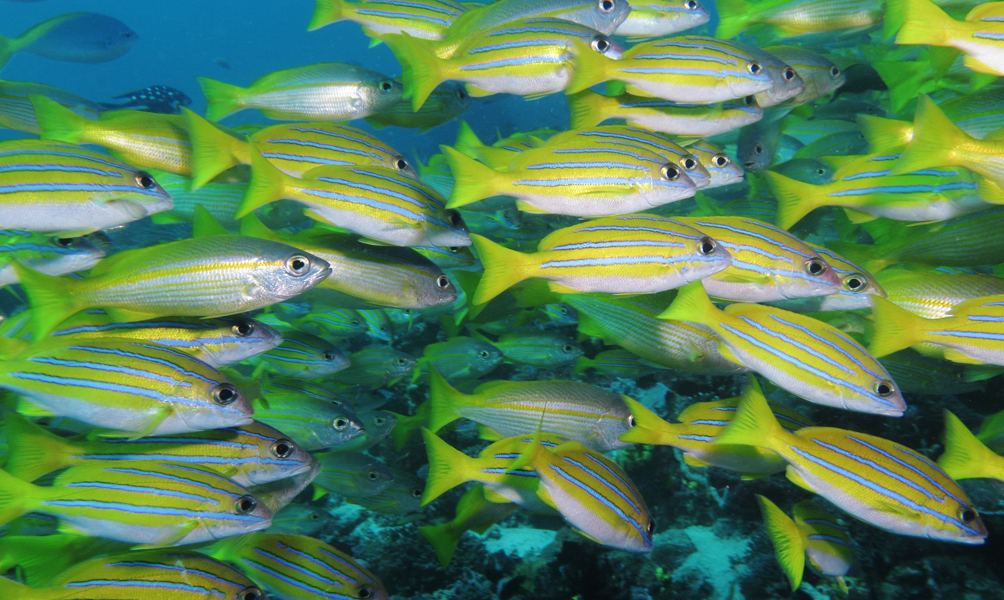
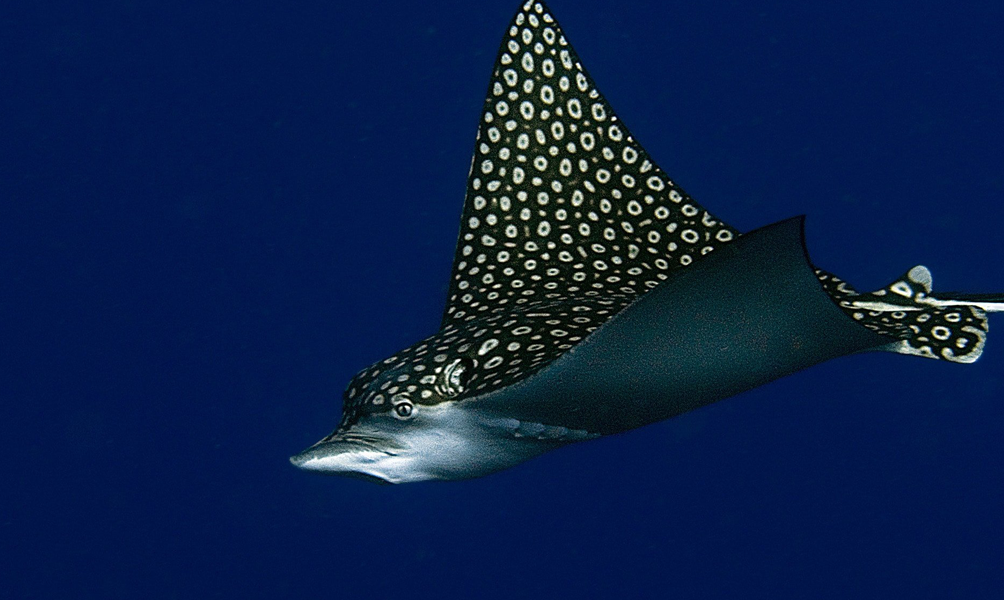
Often used as a checkout dive, Baltra North East offers an excellent introduction to Galapagos diving conditions. A gentle rocky slope extending from the northeastern side of Seymour Island is home to schools of yellowtail grunts, blue-striped snapper and salemas. Eagle rays, marble rays and stingrays are frequently seen, with occasional sightings of jacks and hammerhead sharks. Looking upward, divers may even observe blue-footed boobies plunging beneath the surface in pursuit of fish.

| Cousin’s Rock

(2 Dives)

Cousin’s Rock is one of the most diverse dive sites in the central Galapagos, known for its steep walls and rich marine life. Dive profiles typically range between 6 and 24 metres (20–80 feet), with deeper sections exceeding 40 metres (130 feet). The greatest concentration of activity is usually found above 18 metres (60 feet), where reef fish, rays and sharks are most abundant. During El Niño years, hammerheads and other pelagic species may be encountered at greater depths, following cooler waters and shifting food sources.

galapagos-aqua-diving-cousin-rock
galapagos-aqua-diving-wolf

| Wolf Island

(7 Dives)

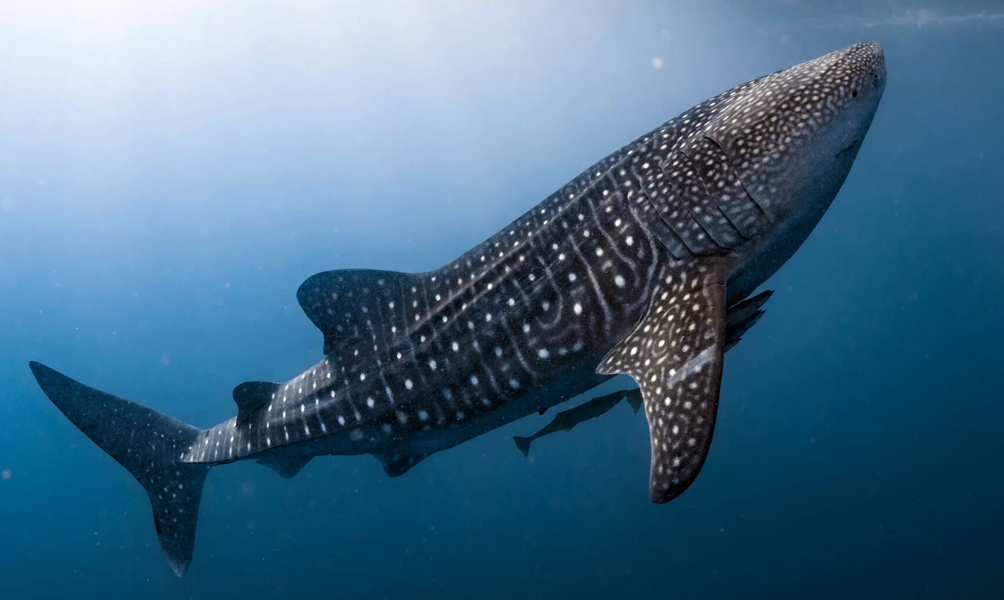
Wolf Island is one of the most legendary dive destinations in the Galapagos Islands, renowned for its dramatic underwater action and remote location. Beneath the rugged cliffs, strong currents attract extraordinary pelagic life, including schooling hammerhead sharks, Galapagos sharks and silky sharks. This is also the only site in the archipelago where encounters with whale sharks are possible. Eagle rays, mobula rays, turtles, large tuna and vast schools of reef fish are common, with occasional sightings of dolphins moving through the area.

| Darwin Island

(4 Dives)

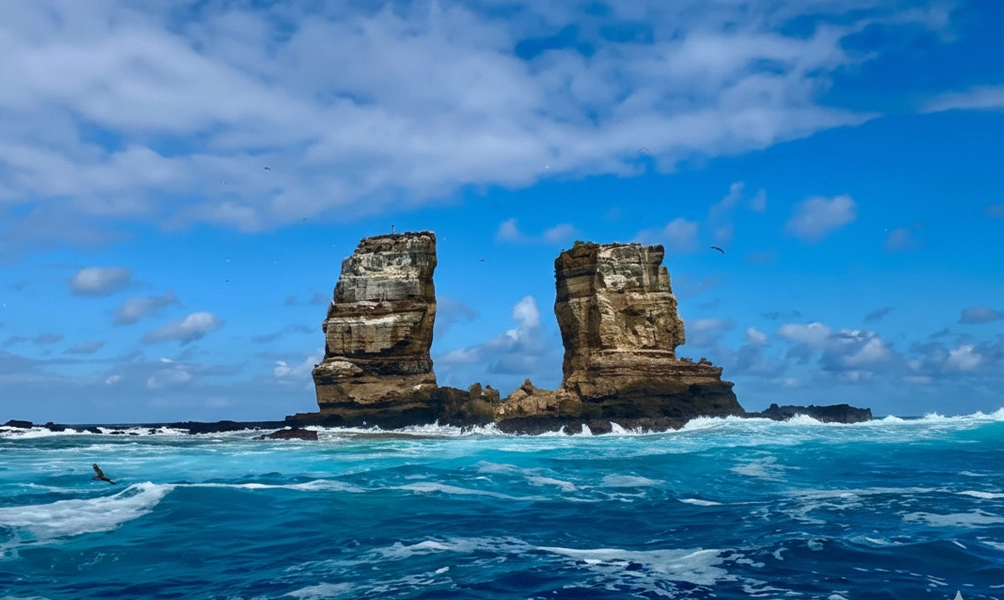
Located at the remote northern edge of the Galapagos Islands, Darwin Island is considered the ultimate highlight of Galapagos liveaboard diving. Strong currents concentrate an exceptional number of sharks, including large schools of hammerheads, silky sharks, Galapagos sharks and blacktip sharks. Manta rays, eagle rays, sea turtles and dolphins are frequently seen, with occasional whale shark encounters. Remarkably, much of this action occurs at relatively shallow depths of around 9 metres (30 feet).

galapagos-aqua-diving-darwin-towers
vicente roca galapagos aqua yacht

| Vicente Roca Point

(1 Dive)

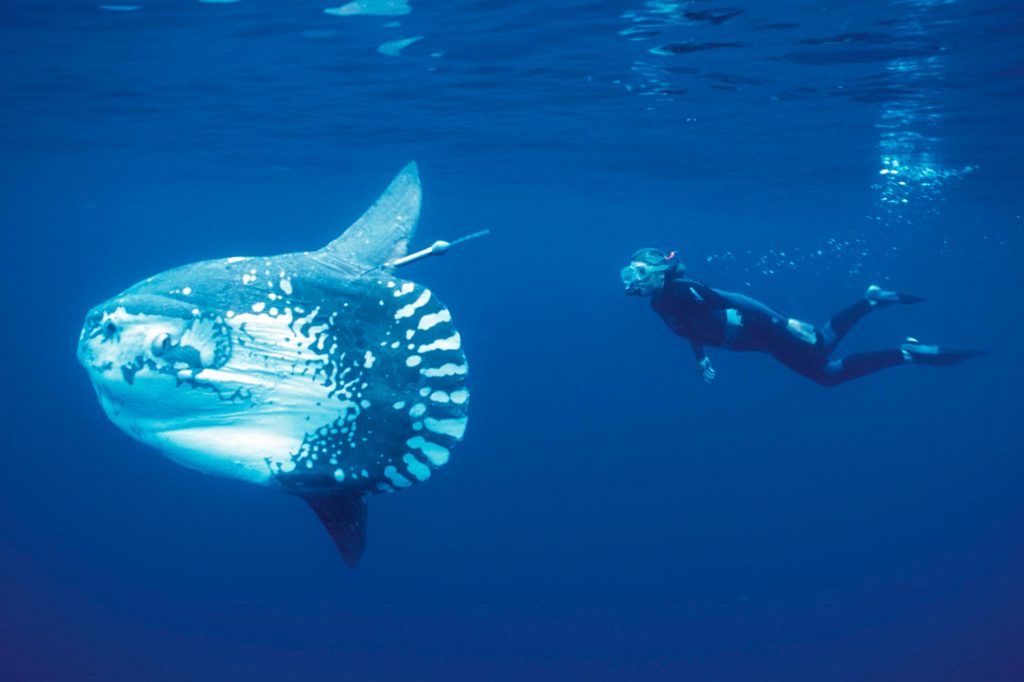
Located on the northwestern coast of Isabela Island, Punta Vicente Roca lies at the entrance of a dramatic volcanic bay shaped by the Ecuador Volcano. Steep cliffs, underwater caves and arches define this unique site. Sheltered areas offer calmer conditions, attracting penguins, reef fish, sharks and occasional seahorses. Encounters with sunfish (mola mola) are common, particularly in cooler waters influenced by deep upwellings, making this one of the coldest — and most rewarding — dive sites in the Galapagos Islands.

| Cape Douglas

(1 Dive)

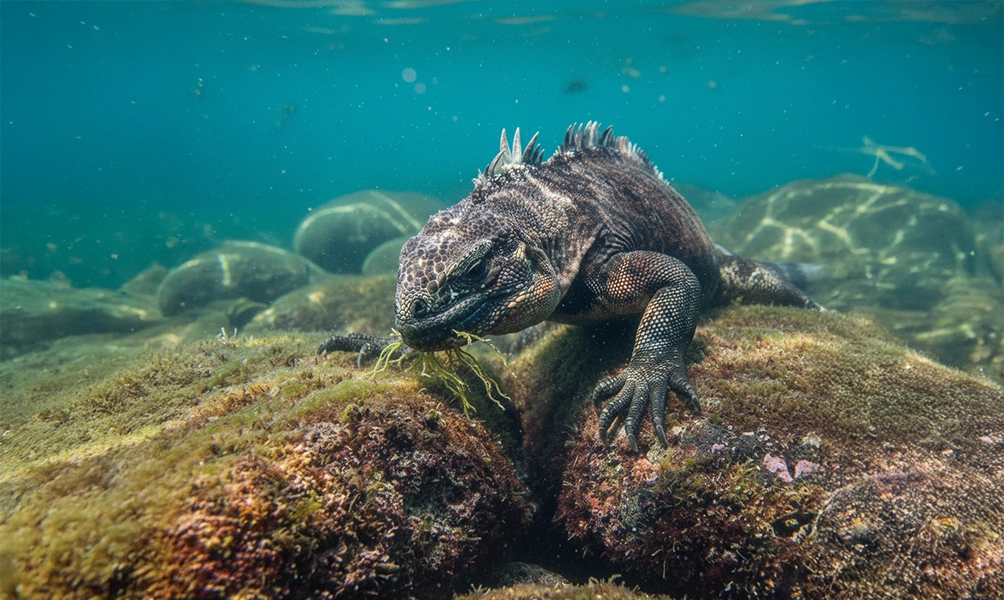
Located off the northwestern coast of Fernandina Island, Cape Douglas lies beneath the slopes of La Cumbre volcano, one of the most active in the archipelago. This remote site is known for its stark volcanic scenery and exceptional wildlife encounters. Divers may observe flightless cormorants hunting underwater, large marine iguanas grazing along the shoreline, and Galapagos penguins, sea lions and turtles thriving in the cold, nutrient-rich waters of the Galapagos Islands.

galapagos-aqua-diving-douglas
galapagos-aqua-diving-roca-blanca

| Roca Blanca

(1 Dive)

Located off the southeastern coast of Isabela Island, Roca Blanca is an outstanding dive site in the central Galapagos, often compared to Darwin’s Towers for its concentration of marine life. This rarely visited area attracts multiple shark species, including hammerheads and Galapagos sharks, along with manta and eagle rays. Sea lions, moray eels, lobsters and dense schools of tropical fish are common, with occasional encounters featuring massive bait balls and fast-moving billfish in open water within the Galapagos Islands.